Case study · Mastercard
Turn the audience into the real-time visual experience.
Visitors become custom digital avatars moving inside a three-dimensional environment on a large LED wall.
- Brand
- Mastercard
- Event
- Salone dei Pagamenti — MiCo, Milan
- Commissioned by
- Competitive Mind (agency), with GiacApp as technical producer
- GiacApp role
- Tracking and triangulation layer, interface into the engine, three custom avatar concepts, real-time implementation and onsite support
- Technology layer
- Unreal Engine 5.4 · C++ · two Stereolabs ZED 2i stereo cameras · Niagara particle rendering · large-format LED
See it running
Thirty seconds of the real thing.
Filmed at the stand: the avatar reads the visitor and copies him as he moves.
Nothing loads from YouTube until you press play.
Challenge
Make a payments trade fair worth stopping for.
A stand at a professional conference has a few seconds to earn attention, and a brand like Mastercard cannot buy that attention with noise. The ask was an audience experience where visitors become part of the branded visual world rather than watching content on a screen.
Solution
Three avatars, modelled to the brand’s own creative direction.
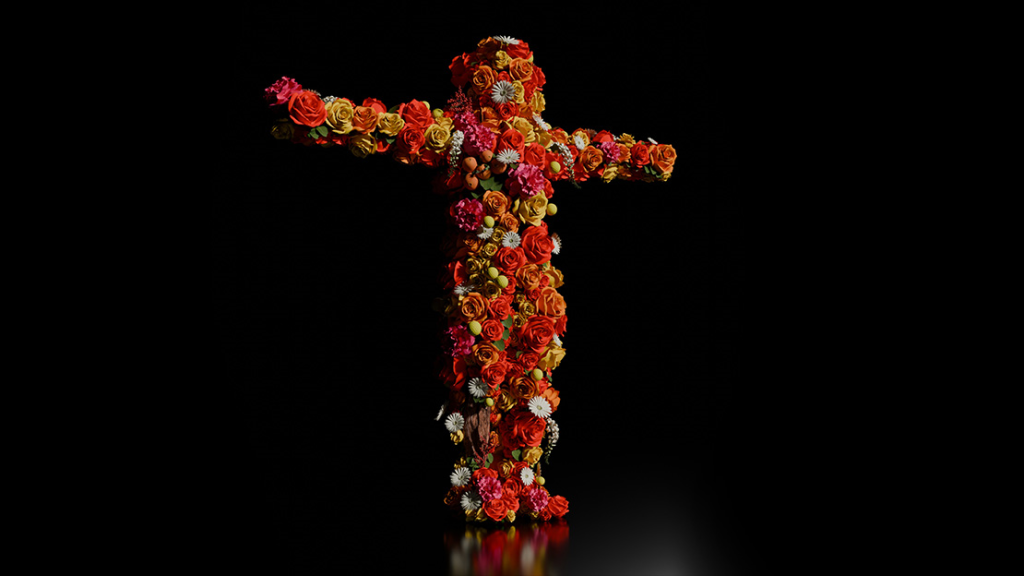
The application transforms audience members into digital avatars moving inside a three-dimensional environment displayed on a LED wall. Three avatar treatments were designed and modelled specifically for this activation — Flowers, Bubbles and Lines — each developed from creative directions supplied by the client rather than pulled from a library.
Two Stereolabs ZED 2i stereo cameras watch the space. A layer written in C++ triangulates their data and feeds it into Unreal Engine 5.4 in real time, so the avatar follows the visitor as they move rather than replaying a canned animation. The avatars are rendered with Unreal’s Niagara particle system, which is what lets a person become smoke, flowers or light and still read as themselves.
The result is an interaction people cannot get anywhere else and cannot passively watch: the environment only moves when they do.
Extension path
Game mode.
The same technology is being extended with new interaction models. With game mode active, avatars interact with dynamic elements inside the virtual environment — turning a visual engagement into a competitive one, with everything that brings for dwell time and data capture.
Anyone can render an avatar. Doing it live, once, on a date that cannot move is the job.
Interactive & real-time
Inside the installation
Planning something similar?
Talk to us before the technical choices become fixed constraints.